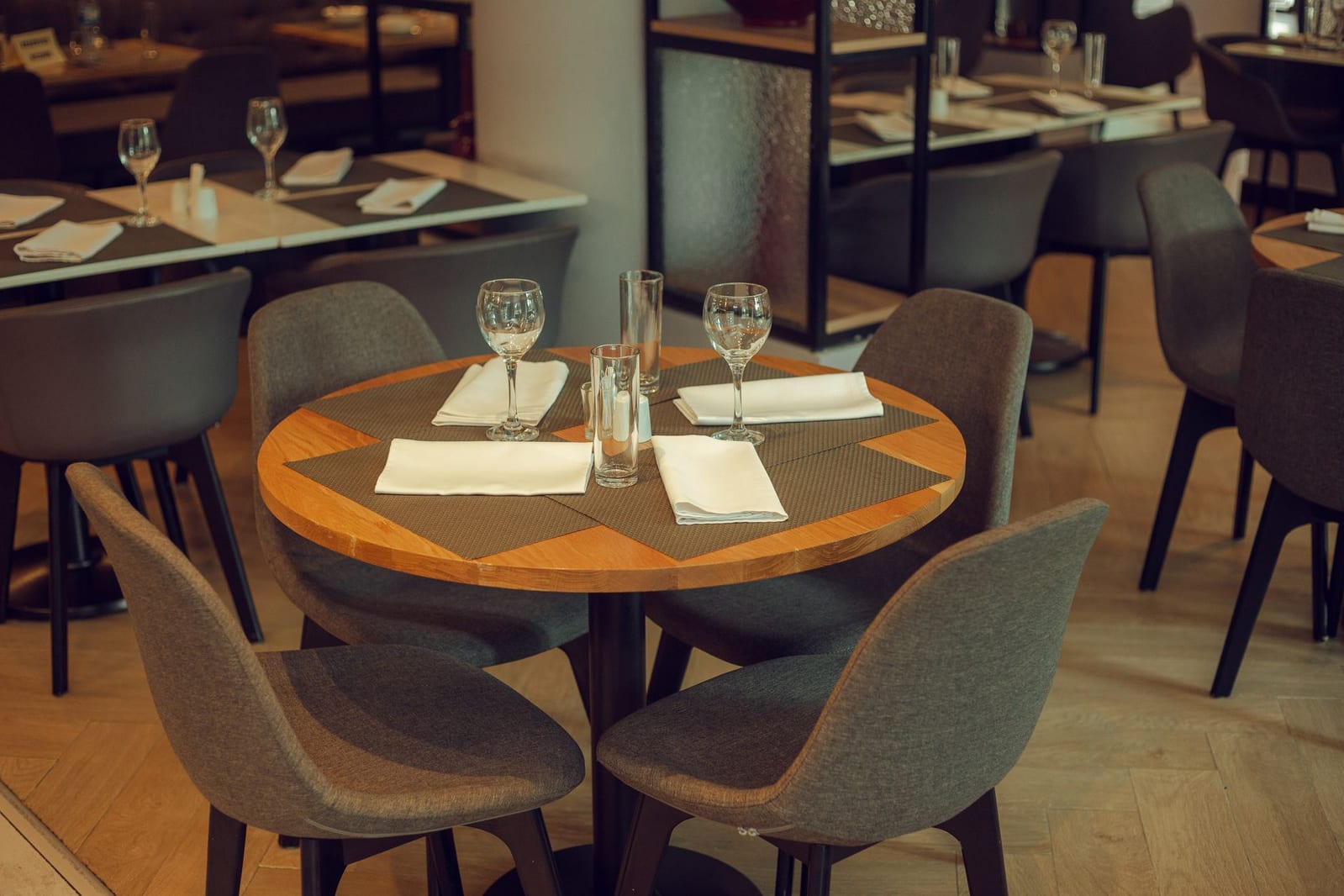
125th Street and Lenox Avenue form one of Manhattan's busiest restaurant and retail corridors, and that density carries real pest-control stakes for any commercial tenant here. A restaurant or food-retail space with unaddressed rodent or cockroach activity doesn't just risk a DOHMH grade — it becomes the food source driving pressure into the pre-war apartment buildings and brownstones on the surrounding blocks.
German cockroaches and Norway rats are the two pests that matter most for a Harlem commercial account: German cockroaches concentrate around food-prep and storage areas, while rats work the corridor's refuse areas and travel along foundations between commercial and residential buildings that sit close together on these blocks.
We build a documented, recurring service schedule for commercial accounts — the standard for any food-service business — with the inspection records a DOHMH visit or lease requirement calls for.
Commercial pest control and NYC pesticide-compliance rules
NYC Local Law 37 of 2005 amended the City's Administrative Code to reduce pesticide use by City agencies, phasing out certain pesticides and instituting new recordkeeping and reporting procedures plus prior public notice before many pesticide applications. Contractors servicing City-owned or City-leased property must work within these prohibition lists and report applications through the NYC Pesticide Use Reporting System. (NYC DOHMH — Local Law 37)
The model FDA Food Code adopted across NY requires commercial food-handling premises to be kept free of insects, rodents and other pests, controlling them by routinely inspecting incoming shipments and the premises, using trapping or other methods when pests are found, and eliminating harborage (section 6-501.111) — an IPM framework that applies well beyond restaurants to any commercial facility handling food or goods. (US FDA Food Code §6-501.111)
FDA Food Code section 6-202.15 requires outer openings of commercial premises to be protected against entry of insects and rodents through self-closing doors, screening, air curtains and sealed gaps. For commercial buildings this makes exclusion and structural proofing — not recurring chemical broadcast — the foundation of a defensible pest-control programme, with each correction worth documenting in the service record. (US FDA Food Code §6-202.15)
Local Law 37 requires City agencies and their contractors to keep records of each pesticide application and to give prior notice before many applications. Even for private commercial sites this sets the NYC documentation benchmark: a compliant programme keeps dated application records, product and target-pest details, and IPM monitoring logs that stand up to a health or agency review. (NYC DOHMH — Local Law 37)
How much does commercial pest control cost in NYC?
$35–$4,000
Monthly contract: $75–$150/visit (broad commercial range $35–$2,000+/month depending on facility size). Restaurant-specific treatment: $150–$500/visit. Annual ongoing commercial service: $600–$4,000/year.
| Monthly contract | $75–$150 per visit |
| Restaurant-specific treatment | $150–$500 per visit |
| Annual ongoing service | $600–$4,000 per year |
US national figure — NYC typically runs higher.
Market range — not our quote
This is a market range synthesised from published cost guides — not a quote from this provider. The actual price depends on an in-person or photo-based inspection.
Thin sourcing — these are industry/trade-service blogs (pest-control software vendors and a single pest-control company), not tier-1 consumer cost-aggregators; no NYC-specific commercial/restaurant figure found. Treat this range as indicative only.
What drives the price
- Facility size/type (restaurant vs warehouse vs office)
- Service frequency (quarterly acceptable for low-risk; monthly typical for high-traffic food service)
- Health-code/documentation requirements (IPM program documentation for food-service tenants)
- Regulatory strictness for food-handling environments
Signs you have a commercial pest control problem
- Live cockroach activity in food-prep or storage areas
- Rodent droppings or gnaw marks near stockrooms, refuse areas, or building foundations
- Customer or neighbour reports of pest sightings
- A DOHMH inspection citing pest conditions, or an upcoming inspection you want to prepare for
Why Harlem sees this
The density of restaurants and retail along 125th Street and Lenox Avenue makes commercial pest control here a neighbourhood-wide issue, not just a single-tenant one — an untreated unit feeds pressure into surrounding residential buildings.
DOHMH restaurant grading ties directly to pest conditions, making documented, recurring service a business necessity for any Harlem food-service account on this corridor.
Commercial buildings on this strip often sit adjacent to or below residential units in the same pre-war structures, so rodent and roach exclusion has to account for shared walls and foundations, not just the storefront.